Concrete Pad in Guelph
Send a Request
A cracked, sinking, or uneven pad can turn a simple space into a constant annoyance. Doors may drag, stored items may wobble, and water can collect where it should not.
If you need a concrete pad for a shed, outdoor equipment, utility area, or another surface that has to stay solid, Guelph Concrete Contractor can help plan and pour it with care for your property at 5 Edinburgh Rd S #3, Guelph, ON N1H 5N8.
A concrete pad does more than create a flat surface. It supports weight, keeps items level, and gives a clean base for a structure or working area. We build pads for residential and commercial properties that need dependable support without fuss.
At Guelph Concrete Contractor, we look at how the pad will be used before any work starts. A pad for storage has different needs than one for utility equipment or a small outdoor workspace. Thickness, size, edge details, and finish all matter.
Concrete pads are commonly used for:
Some property owners know they need a new pad right away. Others notice small problems that keep getting worse. A surface that was once level may now tilt, crack, or break apart at the edges.
If your current pad is no longer doing its job, replacement or repair may be the better path. In some cases, removal and a fresh pour are the cleanest way forward, especially when the old slab has shifted or the surface is too damaged to support what you need.
Hairline cracks can happen, but wider or active cracks may point to movement beneath the pad.
If one side sits lower than the other, the slab may have settled or the base may have failed.
Flaking, pitting, and loose material can make a pad less useful and harder to keep clean.
A pad that once worked for storage may no longer match the size, load, or layout you need now.
A good concrete pad starts with a clear plan. We work through size, shape, placement, and use so the finished slab matches the property and the job it needs to do. The goal is not just to pour concrete. The goal is to create a base that makes sense for the way you use the space.
For properties at Guelph, ON N1H 5N8, we also consider access for the work area, surrounding surfaces, and how the pad connects to nearby walkways, foundations, or structures. That helps reduce surprises during the project and keeps the finished result clean and practical.
Once the plan is set, the work moves toward a base that can carry the slab and help it stay level. That includes site preparation, forming, and the pour itself. Each step matters because a concrete pad is only as dependable as the base beneath it.
We focus on a straightforward process so property owners know what is happening and what to expect. A clean pour, sensible layout, and careful finishing all contribute to a surface that looks right and serves its purpose.
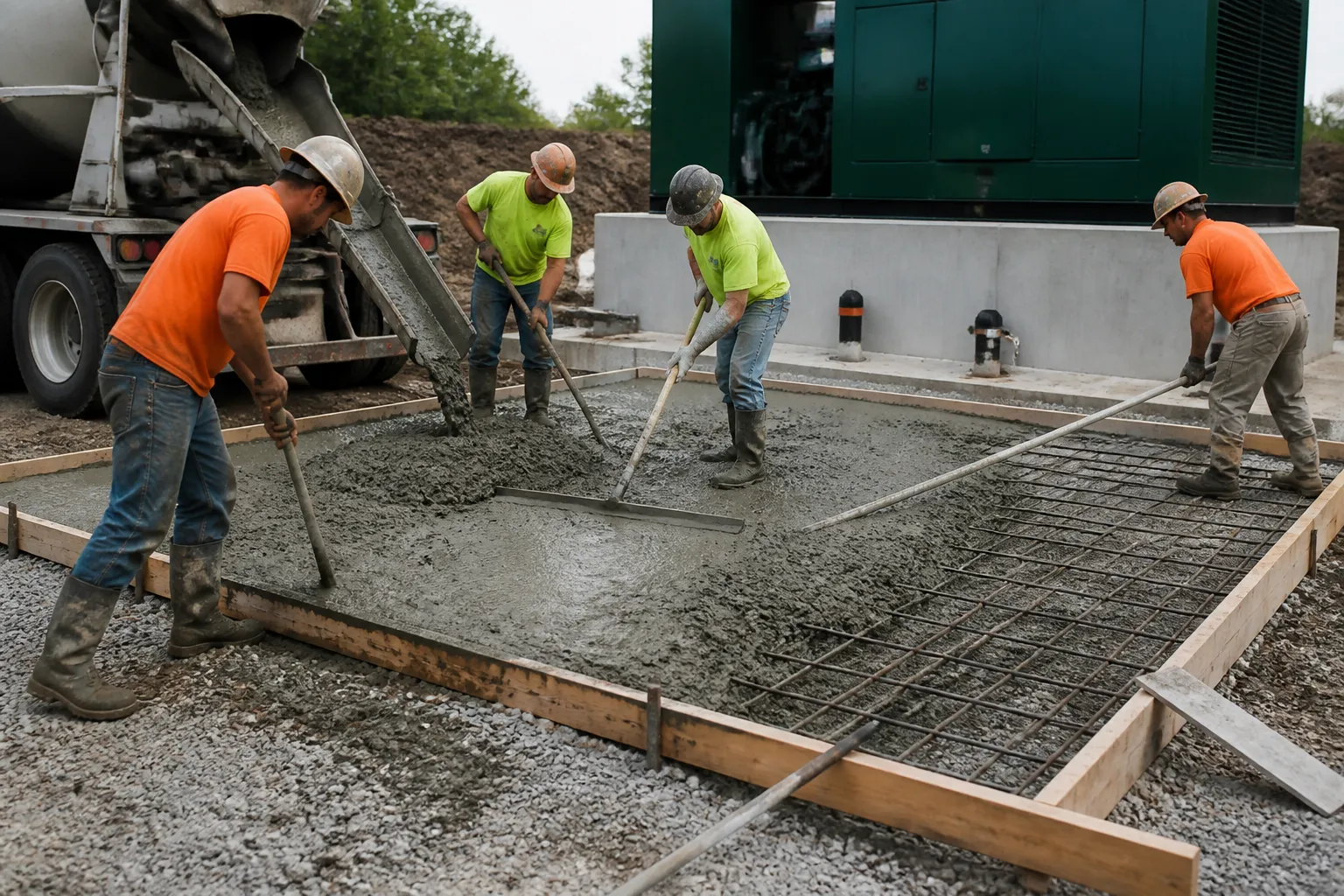
Preparation may include removal of old material, shaping the work area, and setting the form lines that define the pad. If the area needs a new start, concrete removal can clear away damaged material before the new slab is placed.
The concrete is placed to match the planned depth and outline. From there, the slab is leveled and finished for the intended use. A utility pad may need a different finish than a visible patio or entry surface, so the final surface is chosen with the job in mind.
After the pour, the slab needs time to settle and gain strength. We explain what to avoid while it is curing so the surface is not stressed too early.
Not every project starts with a blank slate. Some properties already have a slab that is cracked, broken, or no longer useful. In those cases, concrete repair or concrete removal may be the right first step before a new pad is installed.
We look at whether the existing slab can be kept, reshaped, or replaced. A small repair may make sense for minor damage. More serious movement or breakdown often points to removal and replacement instead.
Used when the surface has limited damage and the base still has value.
Used when the old pad is beyond practical repair or no longer fits the site.
Used when you need a stable, clean surface with the right size and finish for current use.
The finish on a concrete pad should match how the slab will be used. A storage base, patio support slab, or utility pad may all call for different surface choices. The finish affects appearance, traction, and how easy the slab is to maintain.
For some projects, a simple finish is the right call. For others, stamped concrete or sealing may make sense when the pad is part of a more visible area or needs added surface protection.
A concrete pad can fail for several reasons, and the slab itself is not always the first problem. Movement below the concrete, poor drainage around the site, or a slab that was never sized for the load can all create trouble later.
If you are deciding whether to repair or replace a pad, these are common causes we look for during an on-site review.
When the material under the slab shifts, the pad may settle unevenly or crack.
A slab that is too thin for the use it serves may wear out faster than expected.
Using a light-duty pad for equipment or weight it was not built for can shorten its life.
Even a solid slab can break down after years of use, exposure, and surface stress.
Concrete pad work is useful across a wide range of properties, from homes to commercial sites. We serve Guelph and nearby communities such as Cambridge, Fergus, Elora, Milton, Rockwood, Puslinch, Aberfoyle, Morriston, St. Jacobs, Ariss, and Drayton.
Some jobs are small and straightforward. Others involve careful coordination with other concrete work such as concrete foundations, concrete floors, or a concrete driveway. The right approach depends on how the pad fits the larger property plan.
A concrete pad creates a stable, level surface for storage, equipment, small structures, or outdoor use. It helps support weight and gives the area a cleaner, more usable layout.
Sometimes. If the slab is still sound and the problem is limited, concrete repair may be enough. If the slab has shifted, broken apart, or no longer fits the site, replacement is usually the better option.
That depends on what the pad will support. We look at the structure or item, the available space, and how the slab connects to nearby surfaces before recommending dimensions.
No. The finish should match the purpose of the slab. A utility pad may need a different surface than a visible entry area or patio support slab.
Yes. A pad may be installed alongside a patio, driveway, foundation work, or another concrete feature when the property plan calls for it.
A new slab needs time to cure before it is put under regular use. We explain the timing based on the specific work completed and the conditions at the site.
If you need a concrete pad at Guelph, ON N1H 5N8, Guelph Concrete Contractor can help with planning, replacement, removal, or a new pour that fits the space. We take the time to understand what the slab needs to support so the finished result makes sense for the property.
Call +15483258356 to discuss your concrete pad project and get the next step moving.
Get an Estimate
Call us or fill out the form to get an estimate for your concrete project.