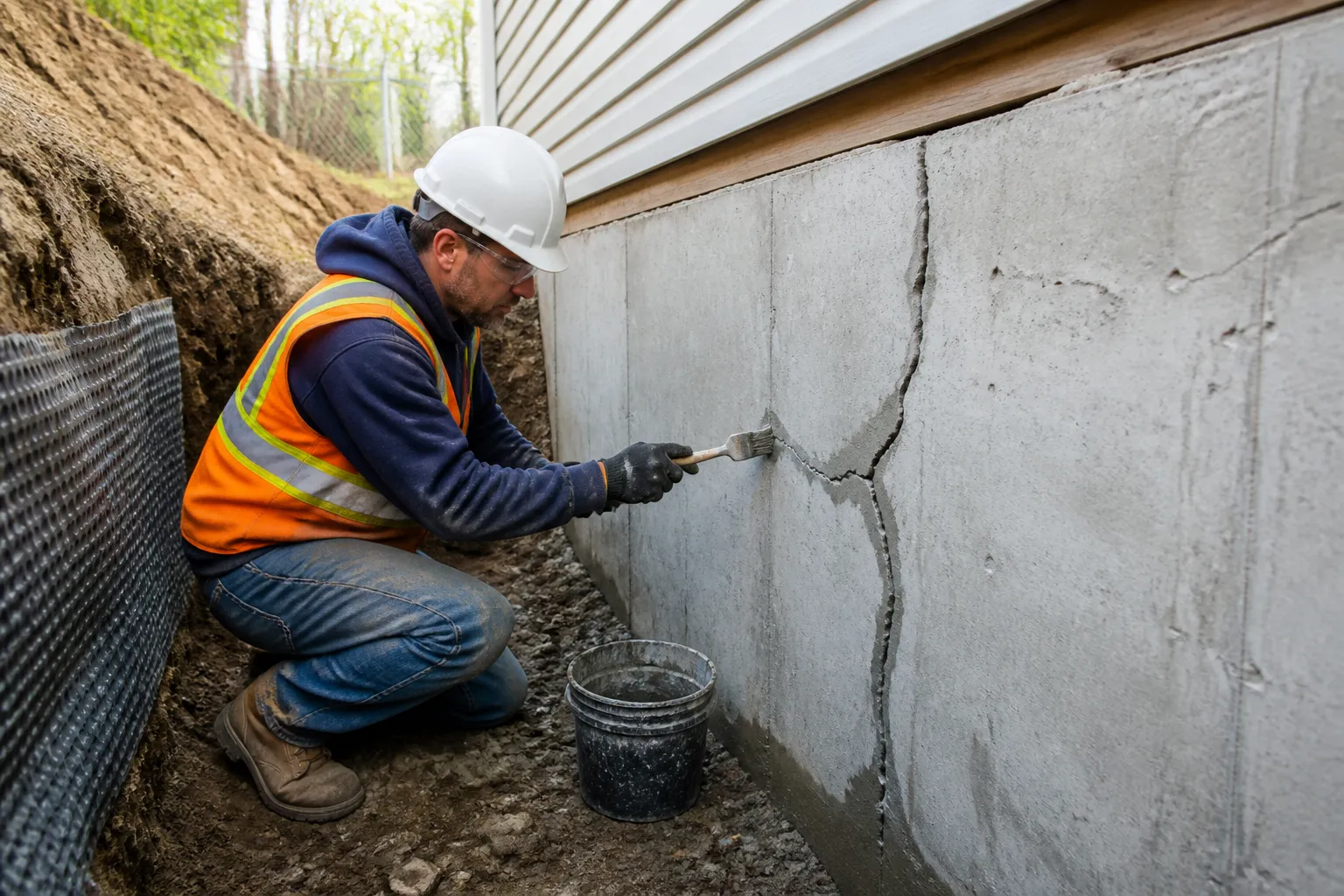
Foundation Repair in Guelph
Send a Request
Cracks spreading across a foundation wall, a floor that no longer feels level, or gaps that keep widening around doors can be signs that your concrete needs attention. If your foundation at a property near Guelph, ON N1H 5N8 is showing movement, the next step is to have it assessed before minor damage turns into a larger structural concern.
Guelph Concrete Contractor handles foundation repair for homeowners, property owners, and businesses throughout Guelph and nearby areas. We look at what the concrete is telling you, identify the source of the damage, and recommend a repair approach that fits the condition of the structure.
Foundation problems rarely begin with one dramatic failure. More often, the clues start small and become easier to spot over time. Paying attention early can help you avoid more involved concrete work later.
When these signs appear together, a repair plan often needs more than cosmetic patching. The goal is to understand whether the damage is caused by cracking, settlement, or concrete deterioration.
Foundation repair starts with a careful look at the structure, not a quick guess. At Guelph Concrete Contractor, we review the visible damage, the location of the cracks, and how the affected concrete is performing as part of the building.
The shape and direction of a crack can tell a lot. Vertical, diagonal, and horizontal cracks often point to different stresses, so we look at each one closely before recommending a fix.
We also look for signs of settlement, separation, and surface displacement. These details help determine whether the issue is isolated or part of a broader foundation concern.
Some foundations need targeted concrete repair. Others require more involved work tied to the slab, wall, or adjoining concrete area. We explain what the damage means and what type of repair is suitable for the condition at hand.
Not every foundation problem needs the same solution. The right approach depends on the type of concrete, the extent of damage, and how far the issue has advanced.
Guelph Concrete Contractor focuses on durable results and a straightforward process, so you understand what is being repaired and why it matters.
Settlement is one of the most common reasons a foundation begins to show damage. When part of the structure moves, pressure changes across the concrete and cracks can form or widen. A repair that only covers the surface may not address the cause, which is why the condition of the full structure needs attention.
We look for:
When settlement has affected the foundation, the repair strategy must match the level of movement and the role that section plays in the building.
Foundation repair often connects to other concrete surfaces near the building. A damaged slab, pad, or floor can shift pressure back onto the foundation, while a failing foundation can affect the concrete around it. Looking at the full picture helps avoid missed causes.
We may also assess:
Because we also handle concrete floors, concrete pads, patios, driveways, and removal, we can approach related work without treating every issue as if it were separate.
Homeowners often want to know what happens once foundation repair begins. The process is straightforward and centered on the condition of the concrete.
This approach helps keep the job clear from start to finish and avoids unnecessary work.
A foundation issue can remain manageable for a while, then suddenly become more visible. Cracks can expand, concrete can break away, and movement can start affecting nearby areas of the structure. Addressing the problem early can reduce the amount of concrete that needs repair later.
Timely foundation repair can also help:
If you have been watching a crack for months or noticing a change around the same wall or floor area, that is usually a sign to have it checked now rather than later.
Foundation cracks can come from settlement, shifting support, stress on the concrete, or aging materials. The crack pattern often helps show what kind of movement is taking place.
Yes. A small crack may stay unchanged, but it can also widen or allow more damage to develop. It is worth assessing before the condition changes.
No. A surface crack, a settling section, and a broken wall area each call for different methods. The repair should match the condition of the concrete.
Not always. We look at the surrounding concrete and connected areas so the repair plan reflects the full issue rather than just the obvious surface mark.
Yes. Floors, pads, driveways, patios, and adjacent slabs can all be influenced by movement at the foundation or can contribute to it.
We work with homeowners, businesses, and property owners across Guelph, ON N1H 5N8 and nearby communities such as Cambridge, Fergus, Elora, Milton, Rockwood, Puslinch, Aberfoyle, Morriston, St. Jacobs, Ariss, and Drayton.
If your foundation is cracking, shifting, or showing signs of settlement, Guelph Concrete Contractor can assess the concrete and recommend the right repair approach. We handle foundation repair along with related concrete work, so you get practical help from a single source.
Call +15483258356 to discuss the condition of your foundation at 5 Edinburgh Rd S #3, Guelph, ON N1H 5N8. We are available every day from 7:00 AM to 10:00 PM.
Get an Estimate
Call us or fill out the form to get an estimate for your concrete project.