Almost every concrete slab cracks. That surprises many homeowners, who see a crack and assume something went wrong. In truth, a few small cracks are normal. The real question is which cracks are harmless and which are a warning. Here is a plain guide for Guelph homeowners.
Why Concrete Cracks
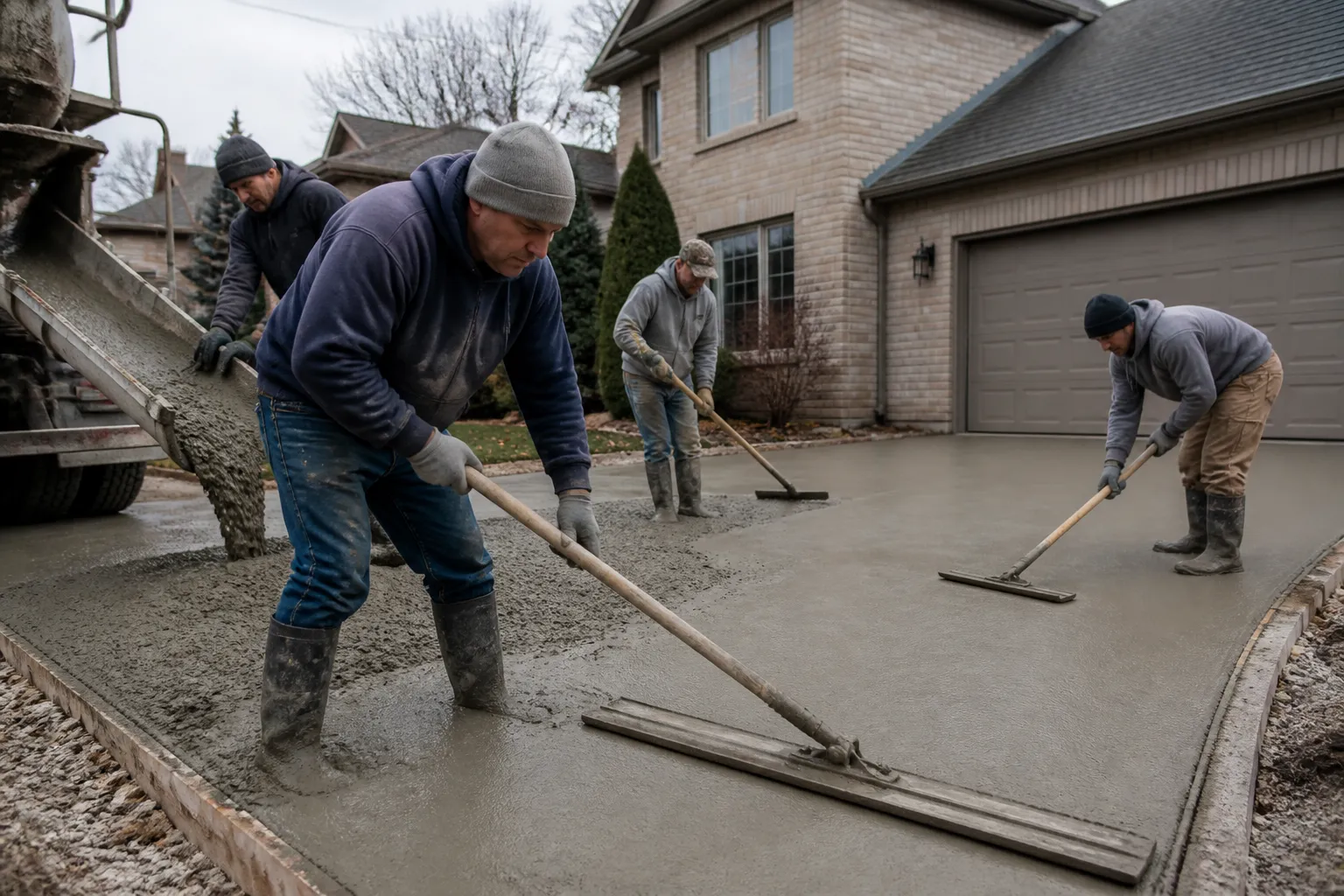
Concrete starts out as a wet mix. As it cures, it dries and shrinks a little. Because the slab is held in place by the ground below, that shrinking creates stress. When the stress is bigger than the concrete can handle, a crack forms. Temperature swings, heavy loads, and soil movement can add to it. In our region, freeze and thaw cycles add even more stress.
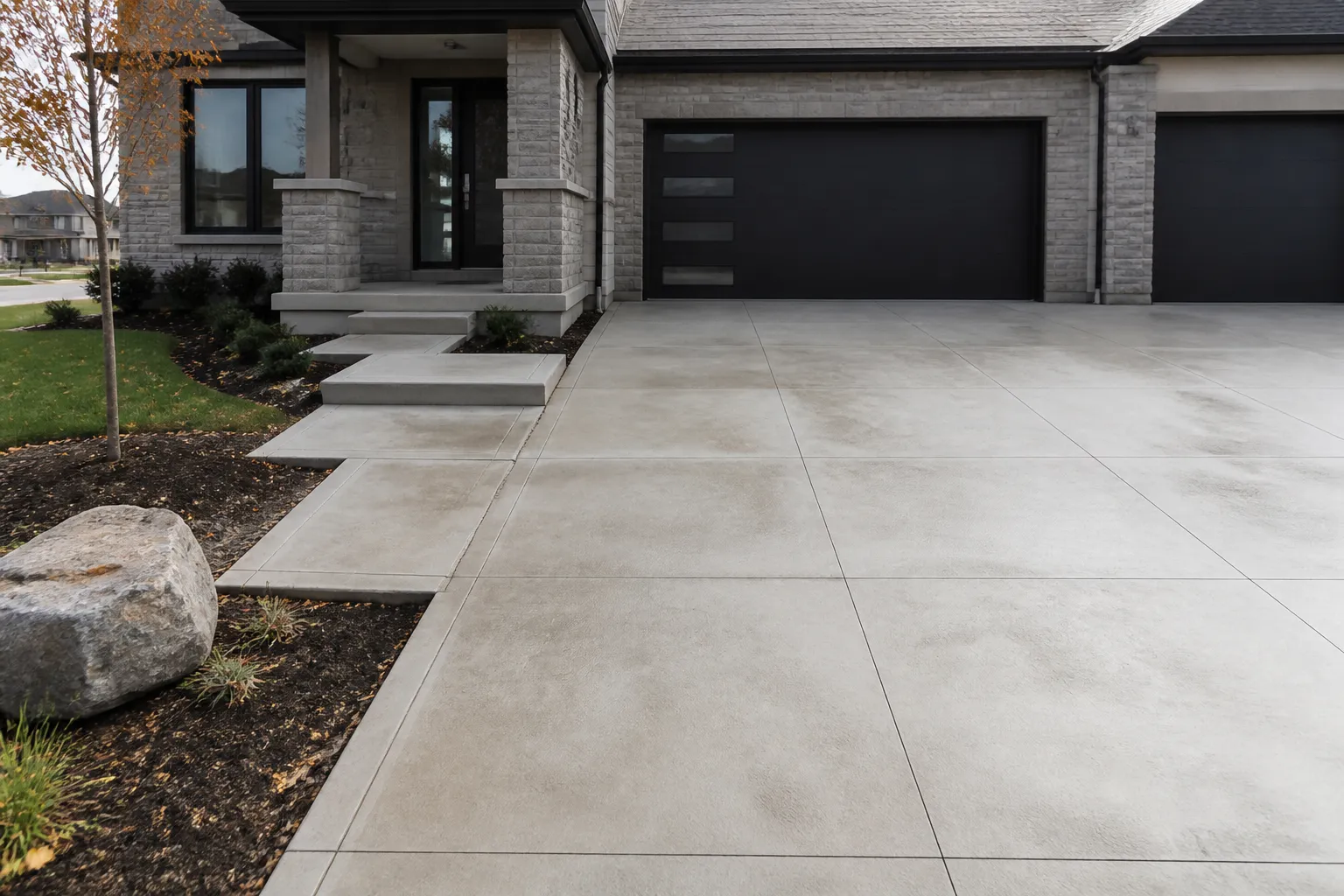
Control Joints: Planned Cracks
Since cracking is hard to avoid, good contractors give it a place to happen. They cut or tool shallow grooves into the slab, called control joints. The groove makes a weak line, so the crack follows the groove and stays neat. A common rule of thumb is to space joints about two to three times the slab thickness, measured in feet. For a four inch slab, that is roughly every eight to twelve feet. Joints are usually cut about one quarter of the way through the slab.
If a slab has no joints, or the joints are too far apart, random cracks are more likely. That is not always a defect, but it is a sign of rushed work.
Cracks That Are Usually Harmless
- Hairline cracks. Very thin cracks, often in the first few months, from normal shrinkage.
- Cracks in control joints. They are doing their job.
- Short surface crazing. A fine spider web pattern on the surface that does not go deep.
Even harmless cracks let water in. In our climate, that water can freeze. So it is smart to seal them, even if they look minor.
Cracks That Deserve Attention
- Wide cracks. A crack you can slide a coin into is worth a look.
- Cracks where one side sits higher than the other. This often points to soil settling or heaving. It can also be a trip hazard.
- Cracks that keep growing. Mark the ends with a pencil and check again in a few months.
- Many cracks in one area. This can mean weak soil, poor base, or too thin a slab.
- Crumbling edges along a crack. Water and salt are already doing damage.
What Causes the Bad Ones
The most common causes of serious cracks are a poor base, extra water in the mix, and bad drainage. Soft or poorly packed ground under a slab will settle. Water running under a driveway can wash away the base. Tree roots can lift and break slabs. Heavy trucks on a thin driveway can crack it. And a slab poured in a hurry, or in bad weather, may cure poorly.
How to Care for Cracks
- Clean out the crack with a brush and remove loose bits.
- Fill small cracks with a flexible exterior crack filler made for concrete.
- Seal the surface of the slab to slow water entry.
- Fix drainage so water does not sit on or under the slab.
- Keep an eye on it each spring.
Do this in dry weather above freezing temperatures, and follow the product directions.
When Repair Is Not Enough
Some slabs are past a simple fix. If a driveway has sunk, if sections have shifted, or if the surface is breaking apart, it may need to be replaced. Replacing a slab on a proper base, with the right mix and joints, can last decades. A patch on a failing slab will not.
What About Cracks in Steps and Garage Floors?
Steps take the most abuse, since water and salt collect there. Fine cracks on a step can turn into broken corners after a few winters, so seal them early. In a garage, small cracks are normal. Look for cracks that line up with sagging or a floor that has dropped on one side.
Also watch the edges of a driveway where it meets the street or the garage. Gaps here let water get under the slab. Filling them with a flexible sealant keeps the base dry and helps the slab last longer.
Keep a Simple Record
Take a photo of any crack you are worried about and put a coin or ruler next to it for scale. Take another photo every spring. If the crack looks the same year after year, it is probably stable. If it is growing, you have clear proof to show a contractor.
Ask Your Contractor About Prevention
When you plan new concrete, ask how the base will be prepared, how thick the slab will be, how joints will be placed, and how the concrete will be cured. Good answers lead to fewer problems.
Guelph Concrete Contractor can inspect your cracks, tell you which ones are fine and which ones are not, and give you honest options. Contact us for a visit.