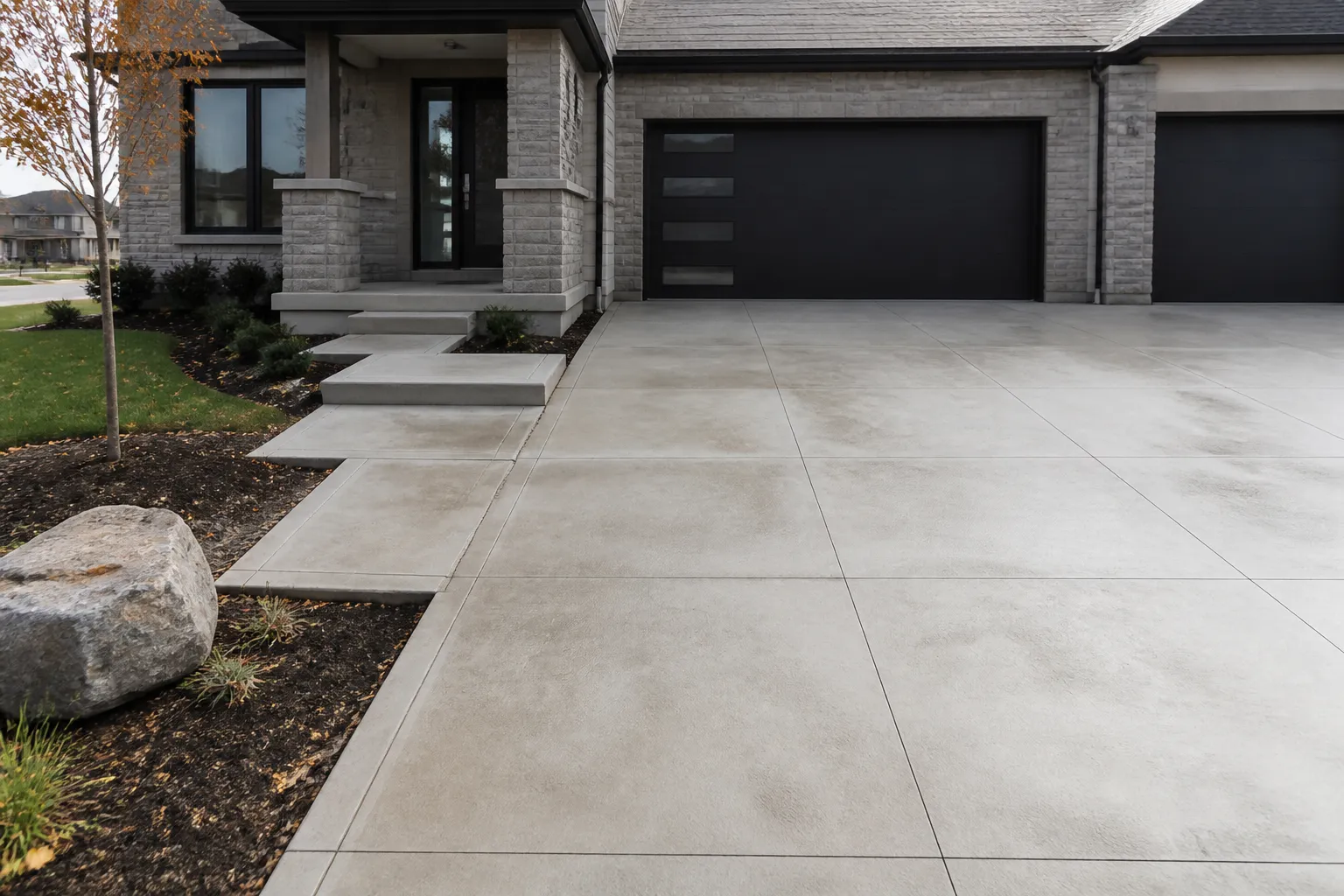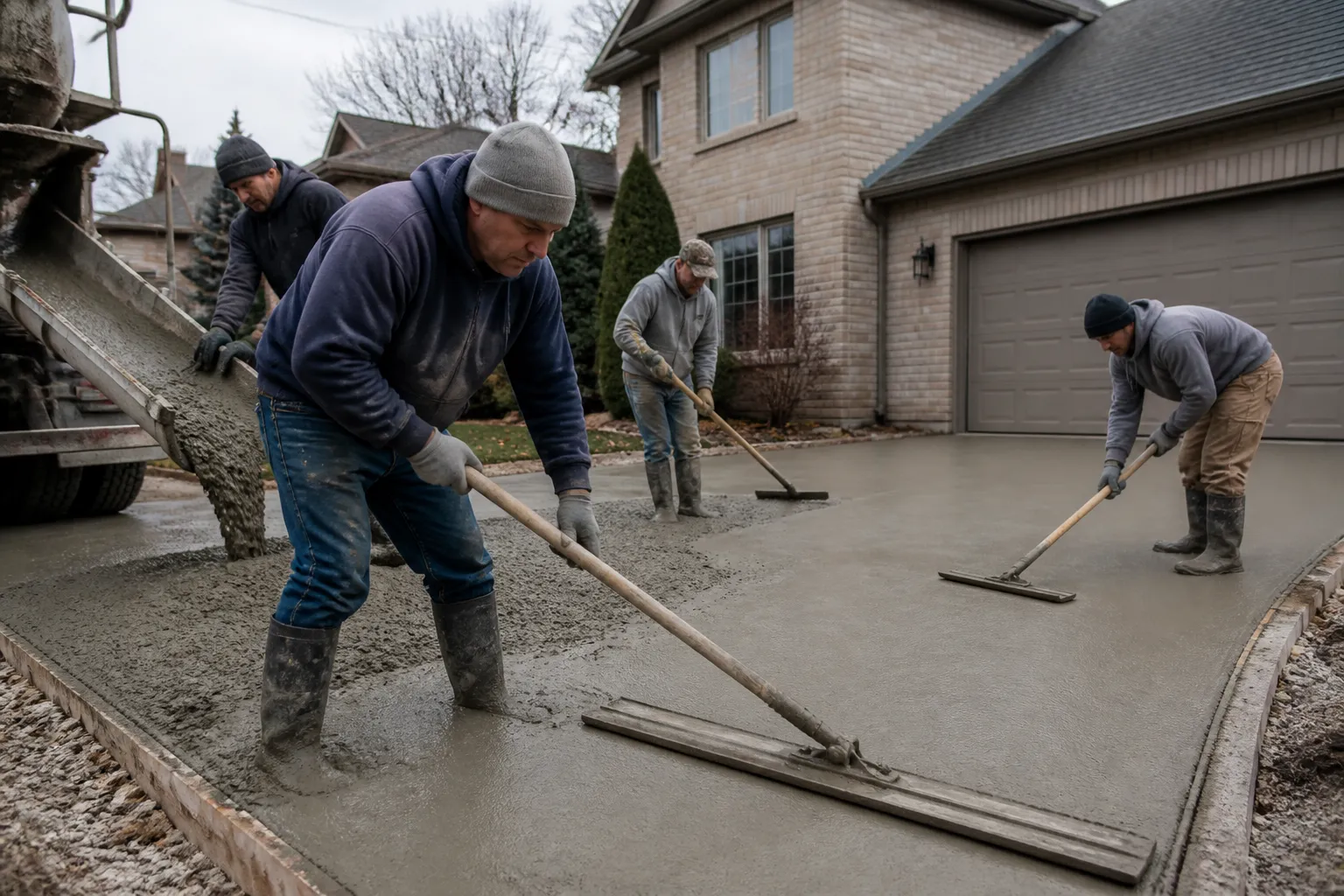
You pour a new driveway or walkway. It looks great. Then, after a winter or two, the surface starts to peel and flake. Small pits show up. The top layer crumbles. This is called scaling, and it is one of the most common concrete problems in Ontario. The good news is that it can be avoided.
What Scaling Is
Scaling is when the thin top layer of concrete breaks away in flakes. It is different from a crack. It usually shows up in winter or early spring, and it often happens on driveways, steps, and walkways that get de-icing salt. The loss may be light at first, just a rough look, but it can get deeper each year.
What Causes It
Scaling happens when three things meet: water, freezing temperatures, and salt. Concrete has tiny pores. Water soaks into them. When the water freezes, it expands and pushes on the surface. Salt makes this worse. It keeps more water at the surface and causes extra freeze and thaw cycles. Over time, the top layer cannot take the strain and breaks off.
Guelph winters are full of this. We get cold snaps, warm spells, and plenty of snow. Each swing from freeze to thaw is another test for the surface.
The Secret Ingredient: Tiny Air Bubbles
The best protection for outdoor concrete is air entrainment. This means adding a special product to the mix that creates millions of tiny, evenly spaced air bubbles. These bubbles give freezing water room to expand, so it does not crack the surface. Research has long shown that concrete without air entrained tends to scale much more than concrete with it.
Canada has a standard for this. The CSA A23.1 standard covers concrete that is exposed to freezing and de-icing salts. For this type of plain, outdoor concrete such as driveways, sidewalks, and curbs, it calls for:
- A low water to cement ratio, no more than 0.45.
- A minimum strength of 32 MPa at 28 days.
- Air content of about 5 to 8 percent for a mix with 20 mm stone.
Ask your contractor what mix they plan to use. If the answer is a basic mix with no air entrainment, that is a red flag for any slab that will see Ontario winters.
Good Finishing Matters
Even the right mix can fail if the work is done badly. A few common mistakes lead to scaling:
- Adding water on site. Extra water makes the mix easier to work, but it weakens the surface and raises the water to cement ratio.
- Working the surface too early. If a crew floats and trowels while bleed water is still rising, it can trap water under a weak skin.
- Overworking the surface. Too much troweling can knock out the air bubbles.
- Poor curing. Concrete needs to stay moist and protected as it gains strength. If it dries out too fast, the top layer is weak.
Be Careful With Salt
New concrete is most at risk in its first winter. Many concrete groups suggest keeping salt off a new slab for at least the first winter if you can. Use sand for traction instead. For older slabs, use salt sparingly. A little goes a long way. Shovel snow early, so you do not need to melt thick ice.
Do not let others park on your driveway with salt covered slush dripping from their cars if you can help it. Some de-icers, like those with ammonium nitrate or ammonium sulfate, can attack concrete chemically. Check the label and avoid them.
Sealers Can Help
A quality sealer made for exterior concrete can reduce the water and salt that soak in. Sealers wear off, so plan to reapply them every few years, based on the product. Sealers are an extra layer of defense, not a replacement for a good mix.
Can Scaled Concrete Be Fixed?
Light scaling can often be repaired with a thin resurfacing product. Deep or widespread scaling may mean removing and replacing the slab. A resurfacing over a weak base does not last, so a pro should check the slab first.
A Quick Winter Routine
Shovel early and often so ice does not build up. Use sand for grip on new slabs. Keep downspouts pointed away from walks and steps. In spring, rinse off leftover salt so it does not sit on the surface.
Plan It Right From the Start
When you hire for a new driveway, steps, or patio, ask three things: Is the mix air entrained? Who finishes and cures it? What do you advise about salt in the first winter? A good contractor will be happy to explain.
Guelph Concrete Contractor can look at your scaled concrete or help you plan a new pour that stands up to our winters. Contact us for a quote.